Confluent's brands each ran their own platform with no shared design foundation, and what documentation existed was locked inside Figma. The challenge was to build one system that could carry every brand's identity, usable by everyone from marketers to developers, and be easy enough to maintain so it wouldn't drift.
My role
Led Strata from 0 to 1
Architected the multi-brand system
Built the documentation platform and Figma tooling with AI-augmented workflows
Project type
Fintech
Enterprise UX
Company
Confluent Services
Tools
Framer
Claude Code
Figma
Date
March – September 2026

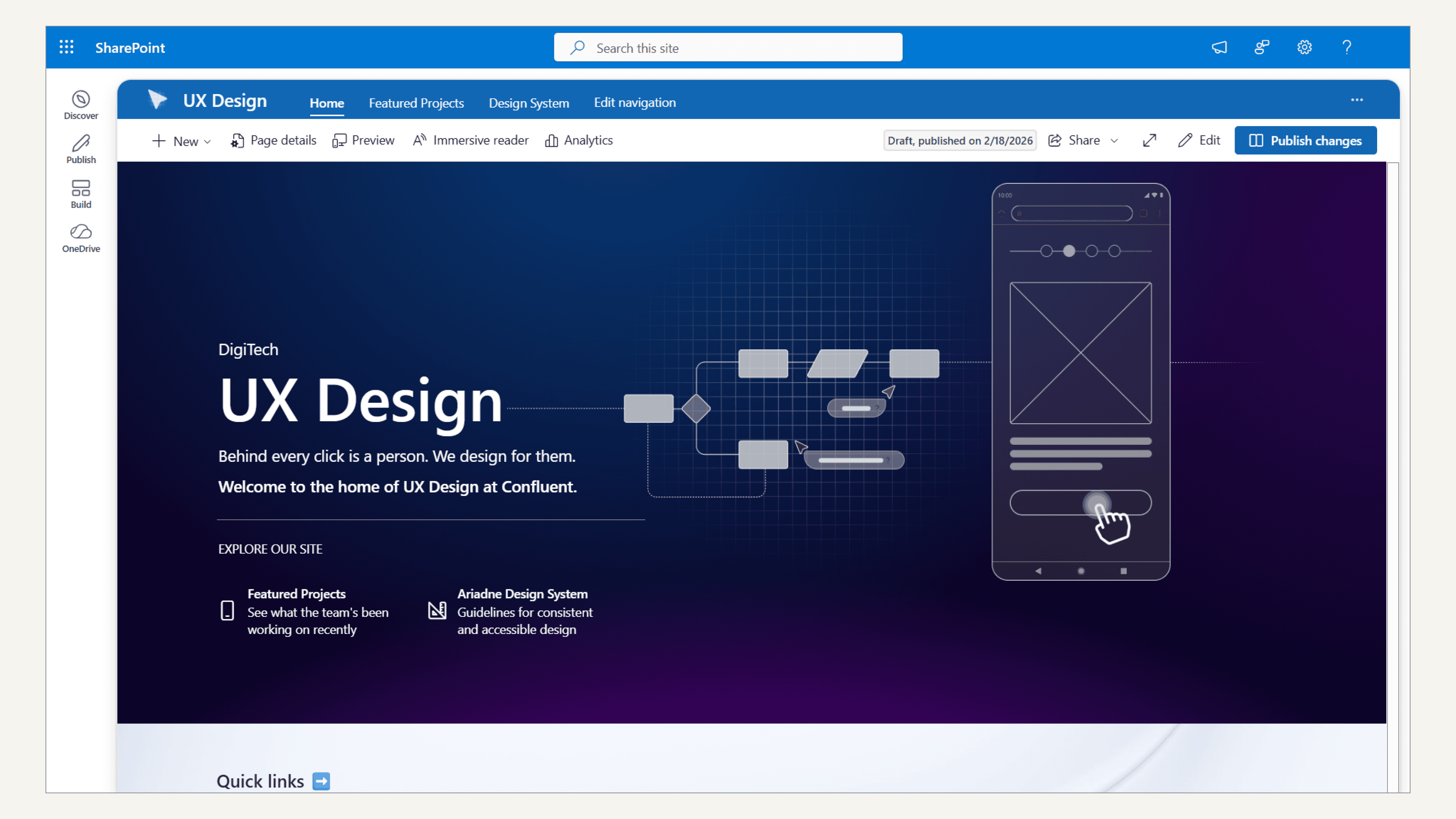
SharePoint held our documentation, but scattered across disconnected pages and invisible to partners outside Confluent's infrastructure. Strata Source replaced it with one organised home for the design system, reachable by anyone who needs it.
Confluent operates multiple financial services brands, each with its own platform, identity, and value proposition.
None of these platforms were built with a shared design library. As product design matured at Confluent, early attempts to introduce one created drift: standards diverged, and documentation was fragmented between Sharepoint and Figma, inaccessible to a diverse audience who would benefit from using it.
The adoption of Sitecore and Framer as digital experience platforms (for consistent journeys, personalisation, and campaign flexibility) instigated the push for a new approach. I recognised the opportunity to consolidate this fragmented approach into one system: Strata.

One foundation, many expressions
Strata had 3 core goals it needed to address from the start:
Multi-brand by construction
New brands extend the foundation, they don't fork it
Accessible to a diverse audience
Not just product design, but marketing, content design, POs, BAs, and dev, including business partners outside our infrastructure and an emerging need to support AI-assisted product workflows
Low-friction to maintain
Custodians shouldn't need a second job just to keep documentation current
System design was only the beginning.
Its architecture resolves into three layers: Strata Central holds every shared primitive, token, and base component — the single source of truth no brand overrides. Each Platform Library consumes that foundation and layers in brand-specific styling. Individual Design Files then inherit both layers automatically, needing only a brand mode and breakpoint set.
Meeting Strata's three goals meant building the platform around it, not just the tokens underneath it.
A system alone doesn't solve anything if no one can find it. That was the problem with our old SharePoint approach: documentation existed, but it was scattered and effectively invisible. And whilst Sharepoint was an accessible and cost-effective intranet tool, it was not suited to design systems — and the vision I had for extending the system into a set of useful tools.
Strata Source: The system's online home
A Framer-based CMS site, with authentication that lets custodians control access and securely invite partners outside Confluent's own infrastructure. Role- and task-based browsing means the content someone sees is shaped by who they are and what they're trying to do, not a flat list of every component in the library.
System Tools
Four tools sit on top of the Source site, meeting people wherever they're actually working:
Editor
A Figma plugin custodians use to write and publish documentation directly from the canvas
This case study reflects my contributions to a design system built as part of my role at Confluent Services. Specific token values, internal documentation, and unreleased platform screens remain confidential. Full detail available on request.
Want to find out more about this project?
Full process available on request.